Brahms requiem
Sunday, March 22, 2026
4:00 pm
Red Hill Lutheran Church
13200 Red Hill Avenue, Tustin
The Southern California Master Chorale presents one of the most profound works in the choral repertoire: Brahms’ Requiem. Filled with soaring melodies, rich harmonies, and deep emotional resonance, this masterwork offers comfort and reflection rather than lament. With its sweeping choral power and tender moments of hope, the piece speaks directly to the human spirit across time and culture. Experience the beauty and consolation of Brahms’ vision in this unforgettable concert.
Johannes Brahms’ Ein deutsches Requiem stands apart in the great lineage of sacred music, not as a plea for the dead, but as a profound offering to the living. Where the traditional Requiem Mass seeks eternal rest for departed souls, Brahms instead turns his gaze toward those who remain, us, shaping a work that consoles, steadies, and ultimately restores. It is less a liturgy of judgment than a meditation on human sorrow and the quiet, resilient hope that follows in its wake.
Composed over more than a decade and shaped by personal loss—including the deaths of his close friend Robert Schumann and, later, his mother— this work emerges not from abstract theology, but from lived experience. Brahms assembles his text, not from the Latin Mass, but from Luther’s German Bible, crafting a deeply personal narrative that speaks in the vernacular of the heart. While he was not the first, not even the first German, to compile his own texts, he was the first to bring it together with the elevation of symphonic grandeur comparable to Bach’s B-minor Mass and Beethoven’s 9th Symphony. In doing so, he removes barriers between performer, listener, and message, inviting each of us into an intimate encounter with grief, remembrance, and renewal.
The architecture of the work itself mirrors a journey of the soul, unfolding across seven movements that trace a path from consolation, through anguish, toward transfigured peace. It begins not in darkness, but in benediction: “Blessed are they that mourn.” It is in the first breath of the chorus that Brahms offers comfort before grief has fully taken shape, as though consolation itself were woven into the fabric of human experience.
From this gentle opening, the second movement (“For all flesh is as grass”) confronts the stark reality of mortality. Its relentless march and somber grandeur remind us of other incarnations of this text, yet Brahms resists despair, allowing the music to bloom into a vision of enduring joy. “But the word of the Lord endureth forever” is a moment where time itself seems to open into eternity.
The baritone’s entrance in the third movement turns inward, voicing the individual soul’s questioning: “Lord, teach me to consider my life.” This is no abstract meditation, but an urgent, personal plea. Yet the movement does not remain in uncertainty; it gathers strength, culminating in a fugue of remarkable assurance with the text “The souls of the righteous are in the hand of God,” as though communal faith rises to meet private doubt.
At the heart of the work, literally and figuratively, lies the fourth movement, “How lovely is Thy Dwelling Place,” a moment of repose that feels almost suspended outside time. Here, Brahms offers not resolution, but refuge. A vision of peace so luminous and balanced that it becomes a kind of spiritual center, a glimpse of what the soul longs for even amid life’s unrest.
This stillness gives way to the most dramatic turn in the fifth movement where the soprano voice enters with intimate tenderness: “You now have sorrow; but I will see you again.” Often understood as Brahms’ most personal tribute, this movement carries the unmistakable warmth of maternal comfort. It is no longer the chorus of humanity or the questioning individual, but a voice of compassion itself: gentle, immediate, and profoundly human.
The sixth movement expands outward once more, grappling with the ultimate mysteries of death and transformation. Beginning in solemnity, it builds toward a moment of apocalyptic grandeur where Brahms invokes not fear, but triumph. Death is not denied but overcome. Wrath is not completed but part of our life. The music surges with a sense of victory that feels hard-won, as though hope has been forged in the crucible of suffering.
Finally, the seventh movement returns us to where we began, but where we sang “Blessed are those who mourn”, we say, for the first time, “Blessed are the dead.” However it is transformed, deepened by all that has come before. What began as consolation has become an acknowledged peace that is earned, enduring, and profoundly at rest.
Brahms’ musical language throughout reflects this delicate balance between gravity and grace. His writing is at once monumental and intimate with choral textures that rise like cathedrals of sound giving way to moments of disarming simplicity, where a single melodic line is meant to feel like a whispered truth. The orchestra does not merely accompany, but breathes alongside the choir, shaping a sonic landscape that is both grounded and transcendent.
In a world often marked by uncertainty and loss, Ein deutsches Requiem offers something rare: not answers, but assurance. It does not attempt to explain suffering, nor does it diminish it. Instead, it dignifies the human experience of grief, holding it with tenderness while gently pointing toward hope. Brahms reminds us that even in our most fragile moments, there exists a quiet strength. That we all have a capacity for renewal that is as enduring as it is profound.
Tonight, as these voices and instruments come together, we are invited not only to listen, but to reflect. Let us consider our own journeys through loss and consolation, and to recognize, perhaps, that we do not walk them alone. In this shared space of sound and silence, Brahms offers us a gift: the possibility of peace, and the enduring promise that sorrow, in time, may yet give way to light.
Ein deutsches Requiem, op. 45
I. Selig sind, die da Leid tragen (1833-1897)
II. Denn alles Fleisch es ist wie Gras
III. Herr, lehre doch mich, daß ein Ende
IV. Wie lieblich sind deine Wohnungen
V. Ihr habt nun Traurigkeit
VI. Denn wir haben hie keine bleibende Statt
VII. Selig sind die Toten
Featured Soloists


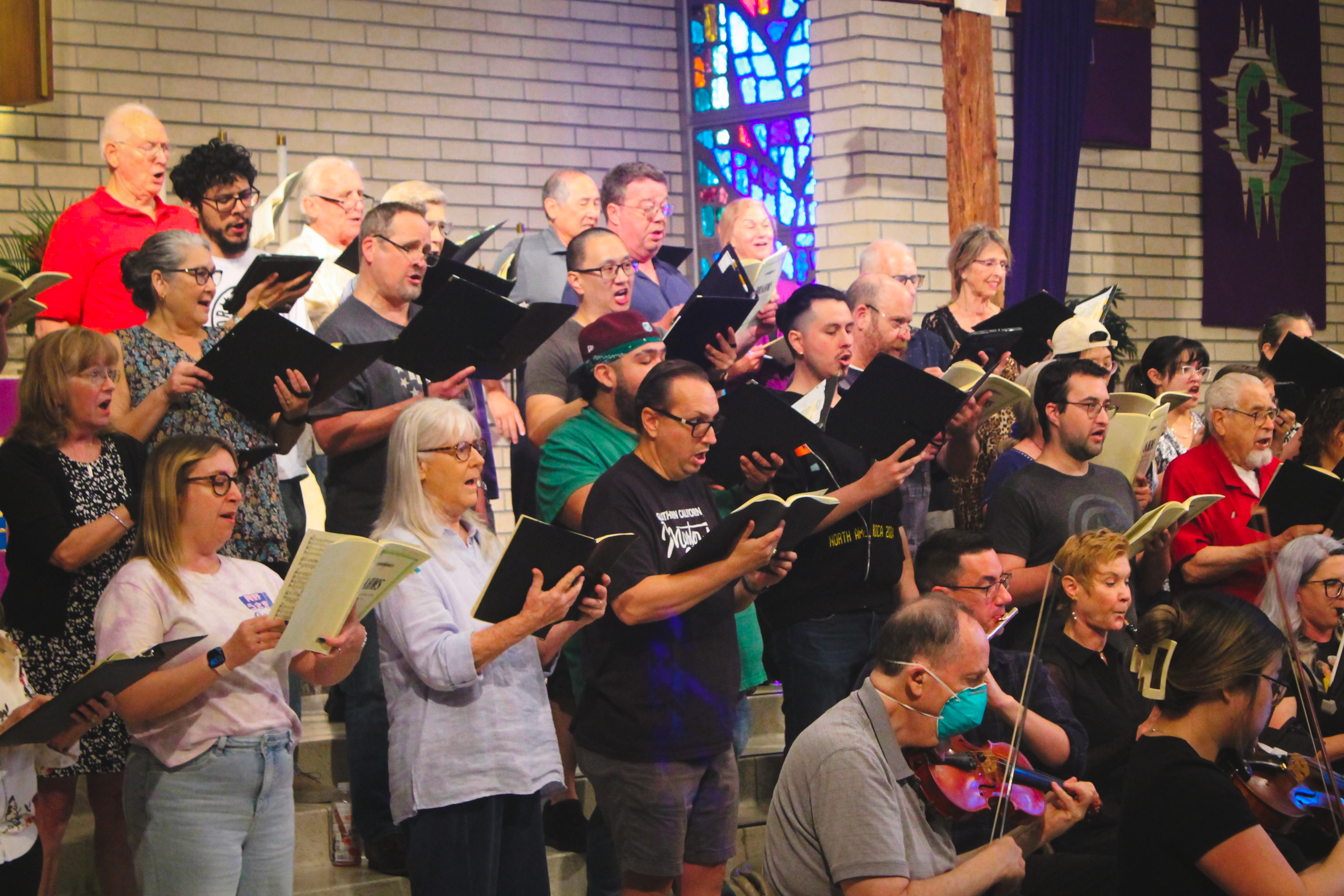
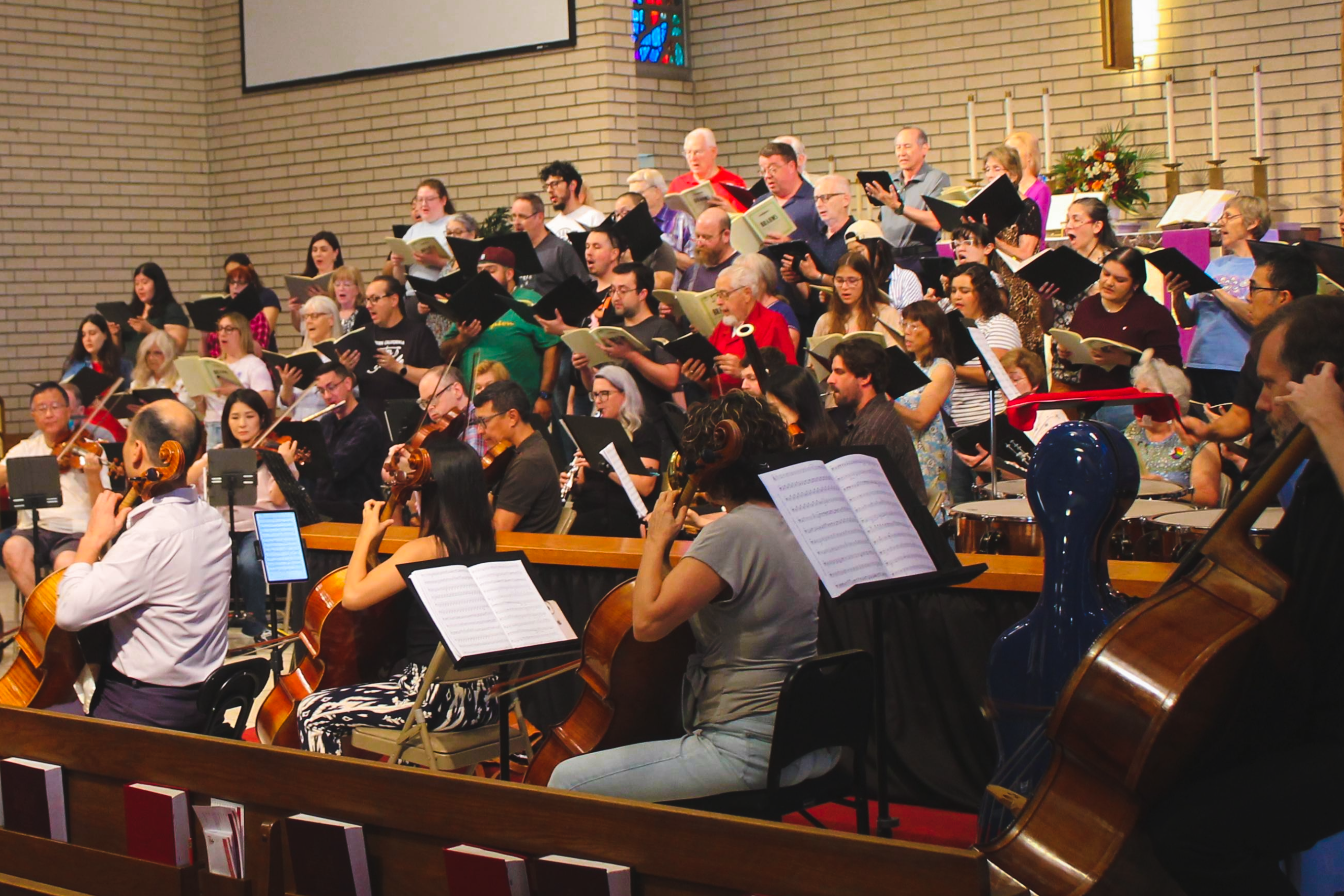
In Rehearsal